





Old Buildings, New Architecture
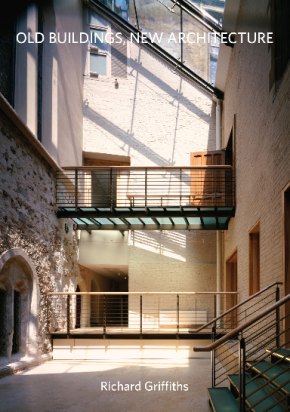
‘Old Buildings, New Architecture’, Richard Griffiths, 2019, 176 pages, 34 black & white and 323 colour illustrations. Copies can be ordered online through http://www.rgarchitects.com.
The London architect Richard Griffiths has published a book about the work of his firm since its foundation in 1993. It discusses and illustrates the practice’s manifold interventions to listed buildings; among them works on national treasures such as St Pancras Hotel, Lambeth Palace, and St Albans Abbey (one of two cathedrals, alongside Southwark Cathedral, where Griffiths was cathedral architect for many years).
A number of his projects have received Civic Trust and RIBA awards and featured in the architectural press, but do not expect another example of vanity publishing. This monograph is about the stimulating environment of history, memory and the graceful process of ageing, about the art of adding a new layer to old buildings. It sums up the life experience of a designer who would not be pigeonholed in the role of conservation architect. He reflects instead on his considerable range of contributions involving historic buildings, from repair and conversion to extension and new building in context.
A plea for beauty in architectural design, followed by an autobiographical introduction and a passionate conclusion, provide the bookends for 16 further chapters that cover topics across the historic environment. These include ‘The layering of history’; ‘Old and new in context’; ‘Old and new in contrast’; ‘The care of cathedrals’; ‘The typology of barns’; ‘The art of repair and the texture of age’; ‘The art of construction and detailing’; ‘The case for restoration’; ‘The regeneration of historic areas’ and ‘Conservation cause célèbre’ (the last being about King’s Cross and St Pancras).
The thematic structure allows readers to use the book as an encyclopaedia as well as a course on contextual design. It will be of equal interest to professionals and those who would like a taster of both heritage and design. Each chapter presents examples of completed projects, starting with a briefing on the history and significance of the building in question, giving colourful insights into the process. The information is concise and accessible as the text strikes a balance between jargon and artful storytelling. The reading experience is enhanced by a plethora of eye-catching images, zooming from site to surface; a printed compendium of site visits, focusing on object and subject from various angles.
Practice brochures in the architectural sphere tend to select just a handful of prominent buildings and dwell on them to showcase a firm’s achievements. Griffiths’ book takes a different approach. It does not discriminate in favour of glamorous projects, but provides an authentic, holistic panorama of the rewarding work of the practice in the historic environment from the Ragged School Museum, Limehouse, to Jesus College, Cambridge; from Oxford Prison to Kenilworth Castle Tudor Privy Garden, Warwickshire; from barns in Suffolk to manor houses in East London; from London Dock Warehouse to the Garrick Club. It comes complete with lists of projects and clients, awards, articles and staff.
This article originally appeared as ‘Manifold interventions’ in IHBC's Context 161 (Page 61), published by The Institute of Historic Building Conservation in September 2019. It was written by Michael Asselmeyer, an architect and architectural historian who worked for Richard Griffiths Architects in 2001.
--Institute of Historic Building Conservation
Related articles on Designing Buildings Wiki
IHBC NewsBlog
IHBC sponsors Gardens Trust event 23-4 Sept 2026
.jpeg)
'Learning from the Past, Shaping the Future’ takes place in Milton Keynes
Renovations to Frank Lloyd Wright's Fallingwater complete
.jpg)
World Heritage Preserved project opens house for tours again
Shakespeare Birthplace Trust places Hall's Croft on HAR Register
Stratford-upon-Avon home of Shakespeare's daughter is 'At Risk'
Lady Grange’s House repaired on St Kilda
.jpg)
National Trust for Scotland repairs stone cleit with link to famous island resident
Griff Rhys Jones on BBC Radio 4 Today programme
,_Green_Lane,_Derby.jpg)
The Victorian Society’s President unveiled its latest Top Ten Endangered Buildings 2026.
Need a MATE? Book your place now.

IHBC offers free webinars on applying for IHBC accreditation (Full & Associate).
UK Stained Glass Repository finds windows new homes

How are stained glass windows are rescued, stored and repurposed?
APPGEBE report sets high aims for quality
'Government must not sacrifice quality in drive to build 1.5m homes'
New measures protect Historic Shipwrecks from heritage crime

Underwater cultural heritage benefits from new HE guidance
How could the City of London skyline look in 6 years' time?

Visualisation shows approved planning applications as completed buildings
National Trust for Scotland calls for VAT cuts
Heritage neglect is encouraged by current policies
IHBC's 'Context' Issue 186 features Industrial Heritage
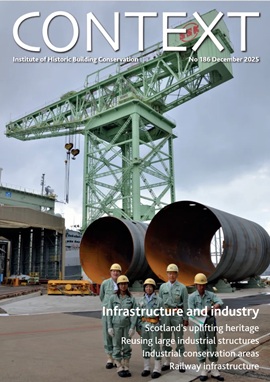
IHBC's members' journal reports on the challenges of conserving infrastructure
Book now for IHBC Annual School 2026
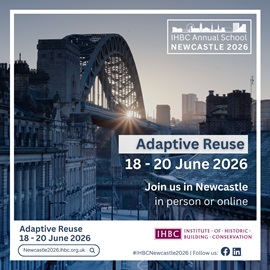
IHBC Annual School is taking place 18-20 June 2026 in Newcastle
RICHeS Research Infrastructure offers ‘Full Access Fund Call’
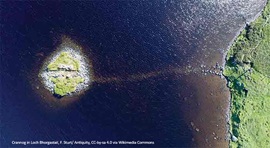
RICHeS offers a ‘Help’ webinar on 11 March
Latest IHBC Issue of Context features Roofing
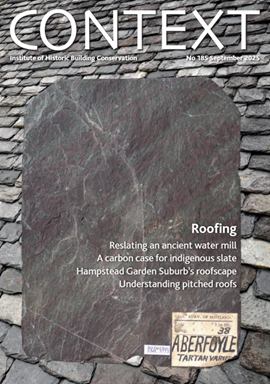
Articles range from slate to pitched roofs, and carbon impact to solar generation to roofscapes
Three reasons not to demolish Edinburgh’s Argyle House

Should 'Edinburgh's ugliest building' be saved?
IHBC’s 2025 Parliamentary Briefing...from Crafts in Crisis to Rubbish Retrofit
IHBC launches research-led ‘5 Commitments to Help Heritage Skills in Conservation’
How RDSAP 10.2 impacts EPC assessments in traditional buildings

Energy performance certificates (EPCs) tell us how energy efficient our buildings are, but the way these certificates are generated has changed.